
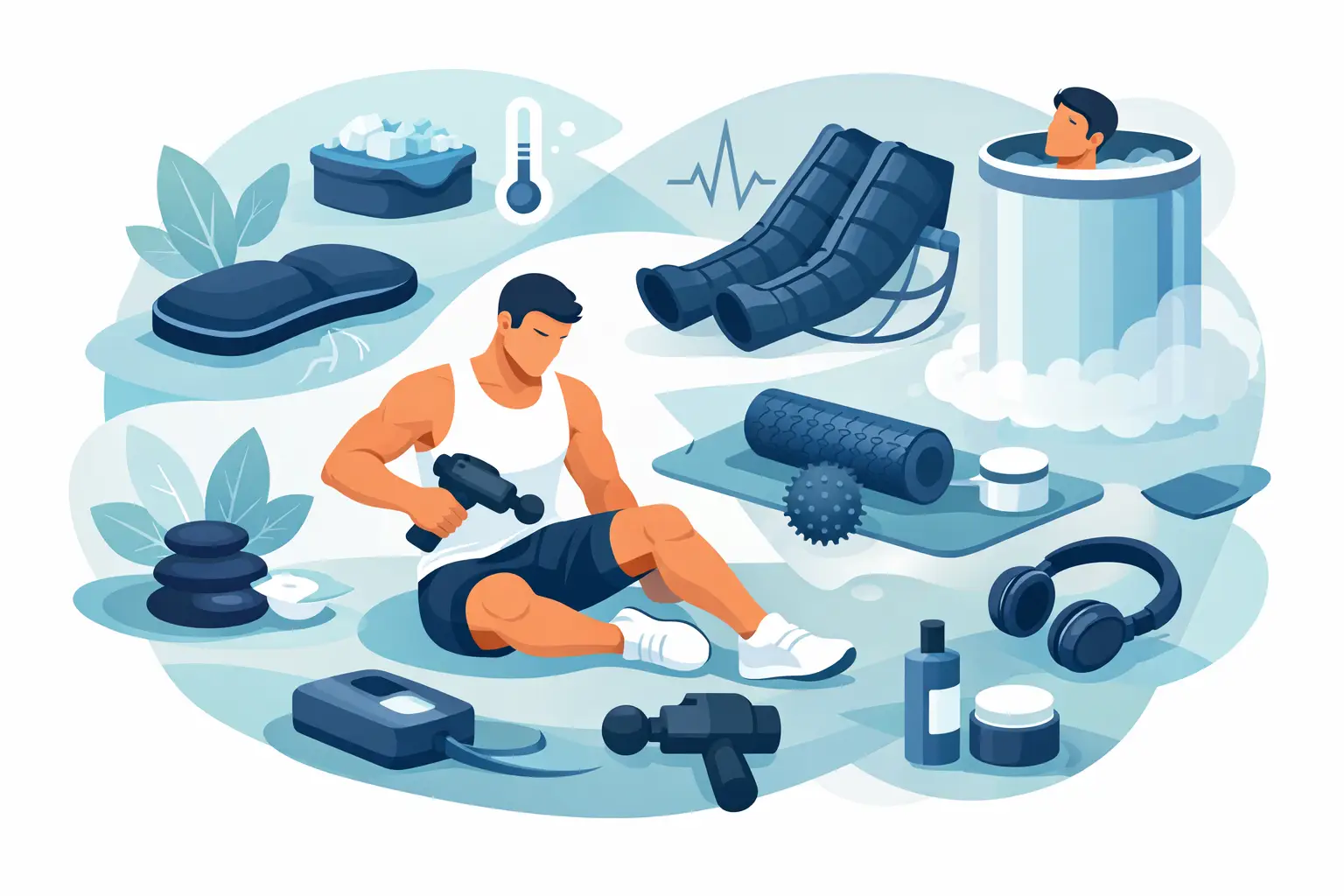
A hard training block can make every shortcut look appealing. Compression boots, cold plunges, massage guns, sleep trackers - each promises a faster return to form. But the best recovery tools for athletes are not the ones with the loudest claims. They are the ones that fit the athlete, the training demand, and the moment in the season.
Recovery is not passive. It is the period where the body adapts to training, restores capacity, and prepares for the next meaningful session. A premium recovery routine should feel less like accumulating gadgets and more like applying the right input with precision.
The Best Recovery Tools for Athletes Start With the Basics
Before adding a device, establish the foundations that make every other intervention more effective. Sleep, sufficient energy intake, hydration, and intelligent training load are not glamorous, but they are the highest-return recovery tools available.
Sleep is especially difficult to replace. Deep sleep supports tissue repair, nervous system regulation, learning, and hormonal processes that influence training adaptation. A wearable can reveal useful patterns, but it cannot create recovery on its own. Consistent sleep and wake times, a dark room, and a wind-down routine will usually matter more than chasing a perfect readiness score.
Nutrition should match output. Athletes who under-fuel often interpret the resulting fatigue, soreness, and stalled progress as a need for another recovery modality. In reality, their system may need more carbohydrate around demanding sessions, adequate protein across the day, and enough total energy to meet the workload. For endurance athletes, field sport players, and anyone training twice in a day, this is often the first performance gap to close.
The final foundation is load management. No tool can fully compensate for repeatedly exceeding your current capacity. If pain rises session to session, sleep deteriorates, or performance drops despite effort, the answer may be a better-designed training week rather than a more aggressive recovery protocol.
Which Recovery Tools Deserve Your Attention?
The right choice depends on whether you need to reduce short-term soreness, restore range of motion, settle after travel, or address a specific injury. These distinctions matter. Feeling fresher is valuable, but it is different from healing damaged tissue or correcting the cause of persistent pain.
Compression boots for heavy legs and dense schedules
Intermittent pneumatic compression boots apply sequential pressure to the legs. Many athletes enjoy them after long runs, competitions, travel, or high-volume lower-body training because they create a noticeable sense of lightness and relaxation.
Their strongest role is practical: they offer a comfortable, low-effort window to decompress after demanding work. They may help with perceived soreness and temporary fluid shifts, particularly when an athlete has been standing, travelling, or competing repeatedly. They are less likely to transform actual muscle repair or replace sound programming.
Compression boots are a sensible option for athletes with congested schedules, but they should not be used to ignore ongoing swelling, unexplained calf pain, or a suspected vascular issue. Those symptoms require clinical assessment.
Cold exposure when soreness is the immediate problem
Cold plunges and ice baths have become a visual shorthand for elite recovery. They can reduce the sensation of pain and soreness after a punishing event, and some athletes find the ritual mentally clarifying. Used selectively, cold exposure can be useful during tournaments, multi-day events, or periods when the priority is feeling ready to perform again quickly.
There is a trade-off. Frequent cold immersion immediately after strength training may blunt some of the signalling associated with muscular adaptation. If your goal is to build strength and muscle over a long training block, daily post-lift plunges may work against the outcome you want.
A more refined approach is to reserve cold exposure for competition phases, exceptionally demanding sessions, or acute soreness that is limiting the next required performance. Keep the water cold but tolerable, limit the duration, and avoid treating discomfort as a test of discipline.
Heat for stiffness, mobility, and downshifting
Heat therapy, whether through a sauna, hot bath, or targeted heat application, can be highly effective for athletes who feel stiff, guarded, or mentally over-activated after training. It promotes relaxation and can make gentle mobility work feel more accessible.
Heat is not the first choice for a fresh injury with significant swelling or heat already present around the joint. In those cases, an assessment is more useful than experimenting at home. For general training fatigue, however, a warm bath or sauna can be a simple, elevated way to transition out of performance mode.
Hydration matters here. Replace fluids and electrolytes appropriately, particularly after a sweat-heavy session, and avoid turning a sauna visit into additional physiological stress when you are already depleted.
Massage guns and foam rollers for short-term movement relief
Percussive therapy and foam rolling are useful because they are accessible, portable, and easy to apply around a training session. They can temporarily improve the sensation of tightness and may help you access range of motion before movement.
The key is to avoid confusing sensation with structural change. A muscle does not need to be aggressively pummelled to become functional, and more pressure is not necessarily better. Use a massage gun for brief, controlled passes over larger muscle groups. Avoid direct work over bones, nerves, irritated tendons, bruised areas, or an acute injury.
Foam rolling pairs well with active movement. A short period of rolling followed by a few well-chosen mobility drills or warm-up sets is generally more productive than spending 20 minutes chasing every tender spot.
Wearables and readiness data for better decisions
Heart-rate variability, resting heart rate, sleep duration, and subjective readiness can offer a useful view of how your system is responding to load. For performance-driven athletes, the value is not in any single score. It is in identifying trends.
A lower-than-usual score after a late dinner, a difficult work week, or a heavy training day is not a reason to panic. A consistent decline combined with poor sleep, reduced motivation, persistent soreness, or a drop in performance is a cue to adjust. Wearables are decision-support tools, not a verdict on whether you are allowed to train.
The most valuable data is often the simplest: note session intensity, sleep quality, soreness, mood, and any recurring pain for several weeks. Patterns emerge quickly when the information is viewed alongside your actual training calendar.
Recovery Tools Cannot Diagnose an Injury
This is where a performance-minded approach separates recovery from guesswork. A sore muscle after a new training stimulus may respond well to rest, nutrition, light movement, and a modality you enjoy. Sharp pain, swelling, loss of strength, instability, altered mechanics, or symptoms that persist beyond the expected window need a different response.
Continuing to train through pain while layering on recovery products can delay a return to full capacity. The goal is not simply to suppress symptoms long enough to complete the next session. It is to understand why the body is signalling, restore confidence in movement, and build a plan that holds up under real training demands.
A skilled physiotherapy or sports therapy assessment can identify whether the issue is related to tissue irritation, joint control, training load, technique, mobility, or a combination of factors. From there, manual therapy and recovery services can be integrated with progressive strength work rather than used as isolated fixes.
Build a Recovery System, Not a Collection of Gadgets
Choose tools according to the friction they remove from your routine. If travel leaves your legs heavy before competition, compression may earn its place. If you struggle to settle after late training, heat and a protected sleep routine may be more valuable. If you are repeatedly tight in the same area, the best tool may be a targeted strength and movement plan rather than another device.
Keep the protocol proportionate to the problem. A recreational runner training three times a week does not need the same recovery stack as a professional athlete in a tournament window. Equally, a high-performing executive who trains intensely around a demanding work schedule may benefit from treating recovery as a protected appointment, not an afterthought.
The most effective routine is usually repeatable: eat enough, sleep consistently, keep easy days genuinely easy, use movement to restore range, and add modalities with a clear purpose. The next time a new tool promises faster results, ask a better question: does it support the performance you are building, or simply make fatigue easier to overlook?