
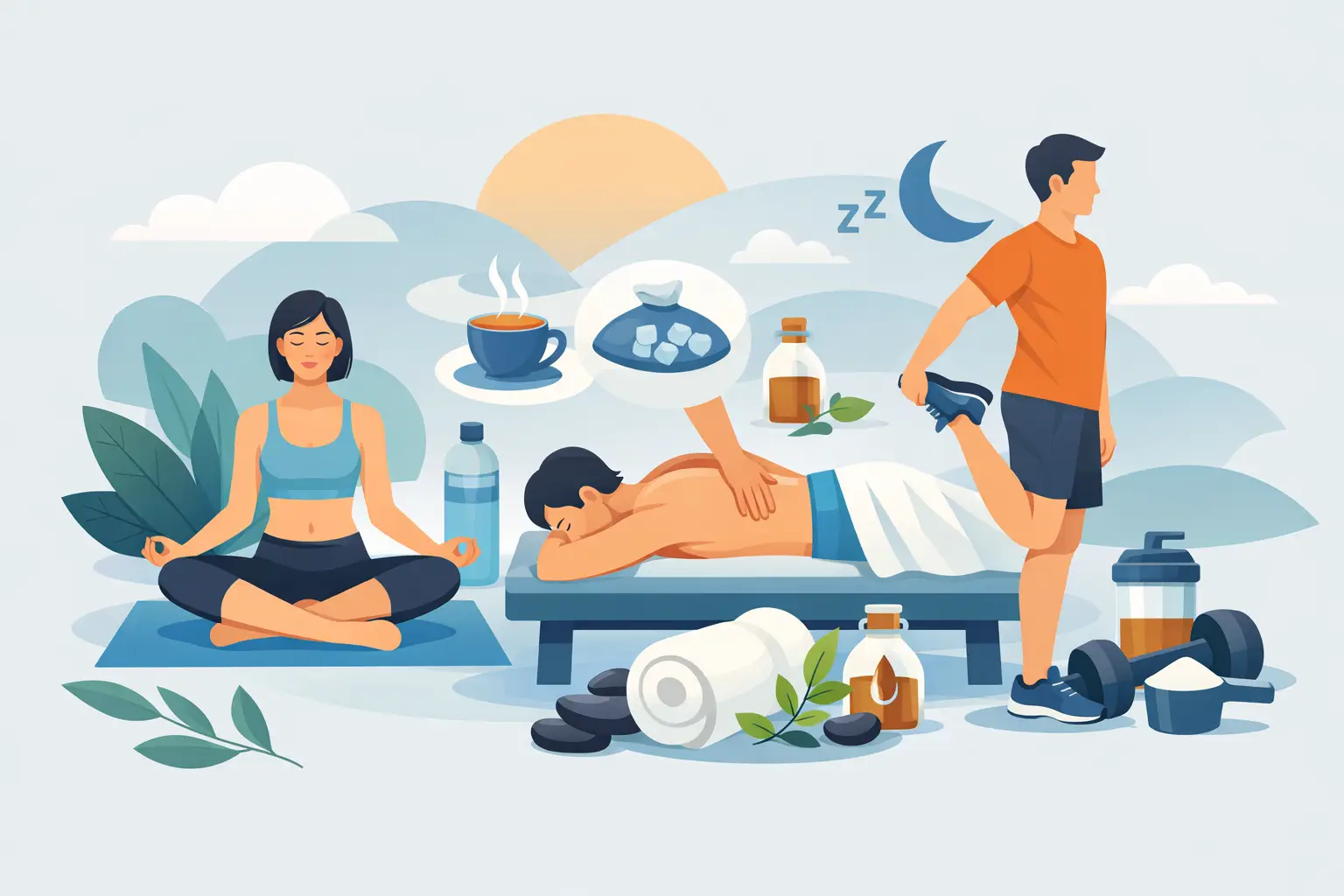
A hard session should leave you feeling trained, not depleted for three days. For active adults, the best ways to improve recovery are rarely found in one dramatic intervention. They are built through a precise system: enough stress to create adaptation, enough restoration to absorb it, and the judgement to know when your body needs a different input.
Recovery is not the absence of training. It is where training becomes capacity. The goal is not simply to feel less sore by tomorrow morning. It is to protect movement quality, maintain consistency, and keep your body ready for the work, sport, and life you expect from it.
Best Ways to Improve Recovery Without Losing Momentum
The most effective recovery strategy is one that fits your current training load, injury history, schedule, and goals. A marathon runner in peak mileage, a parent returning to strength training, and a professional who plays competitive squash twice a week do not need the same recovery prescription.
What they do need is a clear distinction between fatigue that supports adaptation and fatigue that starts to compromise it. General muscle soreness can be expected after a new or demanding stimulus. Sharp pain, altered mechanics, swelling, persistent joint stiffness, or a decline in performance across multiple sessions deserves closer attention.
Start by managing your training dose
Recovery begins before the workout ends. Excessive volume, abrupt jumps in intensity, and repeated maximal efforts create a debt that no amount of stretching or cold exposure can fully erase.
Instead, build progression with intent. Increase one variable at a time where possible: load, distance, pace, density, or complexity. Keep demanding sessions demanding, but place enough lower-intensity work around them to let your system respond. For many people, the problem is not that they train too hard. It is that every session lives in the middle ground - too difficult to be restorative and not focused enough to drive a meaningful adaptation.
A well-designed week has contrast. It may include high-output strength work, sport-specific conditioning, deliberate low-intensity aerobic work, and genuine rest. This structure allows you to train with more quality while reducing the accumulation of unnecessary fatigue.
Make sleep a performance standard
Sleep is not a passive luxury. It is one of the highest-return recovery tools available, particularly when training volume is high or life is demanding. During sufficient sleep, the body supports tissue repair, restores energy availability, regulates appetite, and consolidates motor learning. Those technical changes you practise in the gym or on the field need recovery time to become more automatic.
Aim for a consistent sleep and wake time before chasing perfection. A cool, dark room, reduced late-evening screen exposure, and a clear wind-down routine will often have more impact than an expensive recovery device. Caffeine timing matters as well. If your afternoon coffee is quietly shortening or fragmenting your sleep, it may be costing more than it gives.
One poor night is manageable. Several poor nights in a row can change how heavy training feels, how well you coordinate movement, and how readily pain appears. On those weeks, adjusting training expectations is not a lack of discipline. It is intelligent load management.
Eat for the work you are asking your body to do
Under-fuelling is a common reason active people feel as though they are never quite recovered. It is especially common among people who train early, maintain busy professional schedules, or try to improve body composition while increasing exercise volume.
Protein supports muscle repair and adaptation, but recovery nutrition is larger than protein alone. Carbohydrates replenish glycogen after demanding endurance, field sport, and high-volume lifting sessions. Dietary fats support overall health and energy intake. Fruits, vegetables, and varied whole foods provide micronutrients that help the body manage the demands of training.
The practical question is timing. After a hard session, have a proper meal or substantial snack within a reasonable window rather than accidentally going half a day without eating. Include protein and carbohydrate, then continue to eat consistently through the day. Hydration deserves the same attention. Significant sweat losses, particularly during summer training or indoor sessions, can leave you flat long after the workout is over.
There is no need to turn every meal into a calculation. But if energy is low, soreness is excessive, sleep is disrupted, or performance is plateauing, nutrition is one of the first variables worth reviewing.
Recover Through Movement, Not Just Stillness
Complete rest has a place after illness, acute injury, or exceptional exertion. Yet for ordinary training fatigue, gentle movement often improves how the body feels and functions. A walk, easy cycle, mobility session, or light swim can increase circulation, reduce the sensation of stiffness, and help you transition out of the stress state created by a demanding day.
The key is restraint. Active recovery should leave you feeling better than when you started. If a recovery ride becomes an unplanned threshold session or a mobility class pushes aggressively into irritated tissue, it has stopped serving its purpose.
Mobility work is most useful when it is specific. Rather than chasing maximum range everywhere, focus on the joints and patterns that support your sport or training. Controlled hip rotation, thoracic movement, ankle capacity, and shoulder control may all matter, but their value depends on what your body needs and how you use it.
Use hands-on and clinical care with a purpose
Massage, soft-tissue therapy, manual therapy, compression, heat, and cold can all have a role in elite recovery. Their greatest value is often short-term: reducing discomfort, improving a sense of readiness, or helping you return to comfortable movement. That is worthwhile, but it should not be confused with a substitute for sleep, nutrition, or sensible programming.
The premium approach is not to collect recovery treatments. It is to select the right intervention at the right time. If your calf is repeatedly tightening after runs, for example, the answer may involve hands-on treatment, but it should also include an assessment of ankle mobility, calf strength, running load, footwear, and pacing. Relief matters. So does resolving the pattern that keeps creating the issue.
At Orchard, recovery is viewed through this broader performance lens: reduce the immediate limitation, then build the capacity that makes recurrence less likely.
Know When Soreness Is No Longer the Story
Recovery is not always a lifestyle issue. Sometimes it is a clinical one. Pain that becomes sharper during activity, changes your gait or mechanics, wakes you at night, or fails to improve with sensible modifications should be assessed. The same applies to recurrent strains, a loss of confidence after injury, or a body part that needs constant preparation simply to tolerate normal training.
A thorough physiotherapy or sports therapy assessment can identify whether the issue is related to tissue irritation, load tolerance, movement strategy, strength deficits, or another contributing factor. The right plan may include treatment, progressive exercise, changes to training exposure, and a measured return to sport.
This is particularly relevant for driven people who are skilled at pushing through discomfort. Determination is valuable, but it can also obscure useful feedback. The most resilient athletes are not those who ignore every signal. They are those who interpret the signal early enough to make an effective adjustment.
Track trends, not single sessions
Recovery can feel subjective, which is why a small amount of tracking can be useful. Notice your sleep quality, mood, muscle soreness, motivation to train, and how your warm-up feels. You do not need a complicated dashboard. A simple note on your phone can reveal patterns between hard sessions, travel, work deadlines, alcohol intake, menstrual cycle changes, and recurring symptoms.
Look for trends over seven to 14 days. A single sluggish workout may mean very little. A persistent drop in enthusiasm, poor sleep, elevated soreness, and declining output is more meaningful. That is the moment to reduce load, improve the basics, or seek expert guidance before a small issue becomes lost training time.
The most refined recovery plan is not the one with the most equipment. It is the one you can repeat: train with intent, eat enough, sleep consistently, move well on lower days, and get precise support when your body asks for it. Give recovery the same standard of attention you give performance, and it will keep expanding what your body can do.