
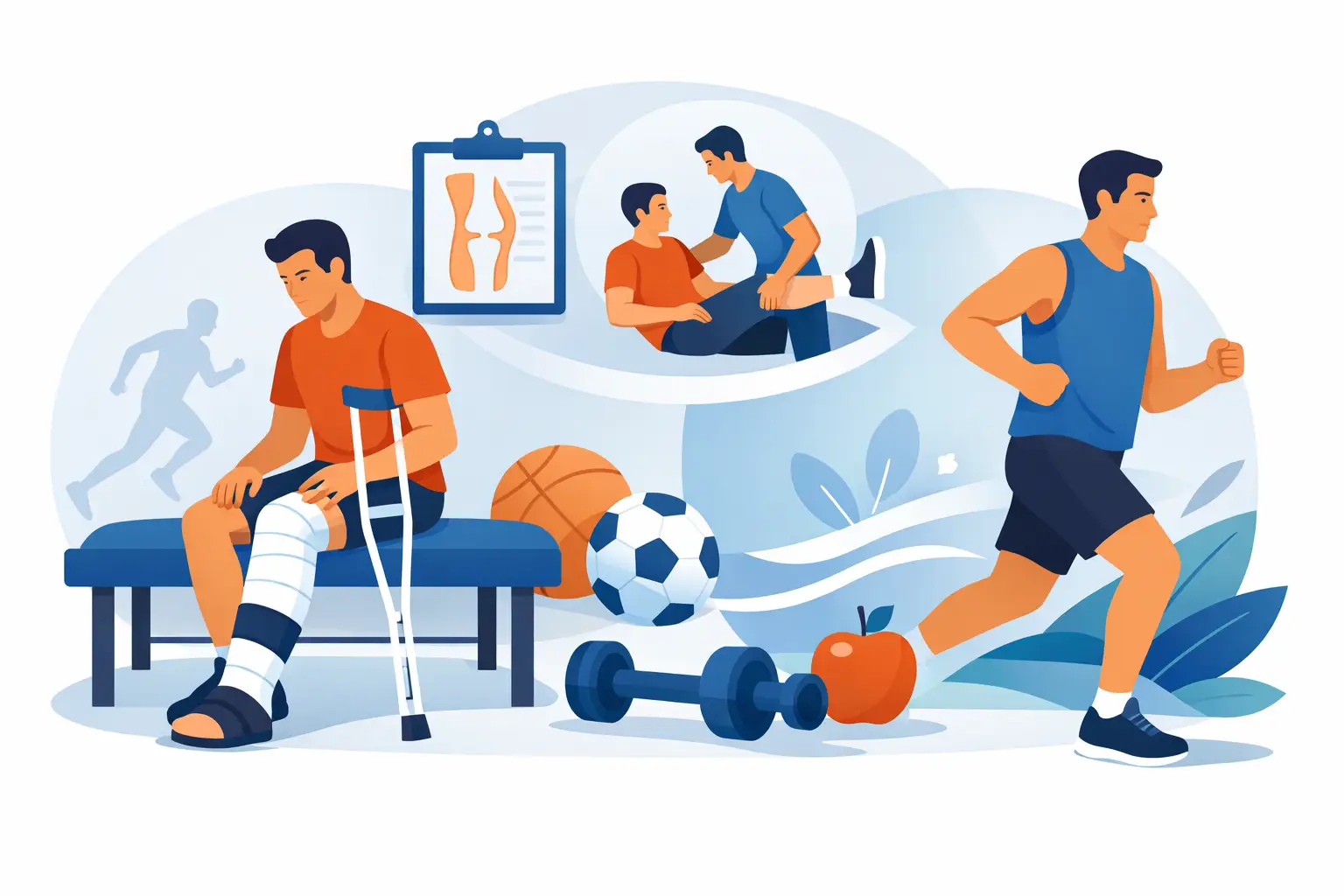
The first 72 hours after an injury can shape the next 12 weeks. The instinct to test it, stretch through it, or return before you are ready is understandable, especially when training is part of your identity. But knowing how to recover after sports injury means replacing guesswork with a measured plan: protect the tissue, understand the diagnosis, restore capacity, then earn a return to the demands that matter.
For active adults, recovery should not be framed as time away from sport. It is a period of deliberate rebuilding. The goal is not simply to feel less pain walking around. It is to return with the strength, control and confidence to sprint, lift, play or train without compensating.
Start with the right diagnosis
Not every sore knee is a tendon issue, and not every rolled ankle is a minor sprain. The location of pain can be misleading, while the mechanism of injury, range-of-motion changes, swelling and loss of function tell a more useful story. A precise assessment gives your recovery direction and helps distinguish an injury that can be managed with progressive rehabilitation from one requiring imaging, specialist input or a period of more complete protection.
Seek urgent medical assessment after a significant impact or twist if you have any of the following:
- An obvious deformity, a suspected fracture or inability to bear weight
- Rapid, substantial swelling or a joint that feels locked
- Numbness, weakness, a cold limb or altered sensation
- Severe pain that is escalating, or a sudden pop followed by major loss of function
For less urgent injuries, an early physiotherapy or sports therapy assessment remains valuable. It identifies what is irritated, what is weak or restricted, and which parts of training can continue without extending the problem. This is where a performance-led plan begins: not with blanket rest, but with intelligent decisions.
Calm the problem without becoming inactive
The old approach of complete rest until pain disappears is rarely the best route. Some injuries need a short protection phase, particularly after acute trauma. Yet prolonged inactivity can reduce strength, stiffness tolerance, coordination and confidence - all qualities you will need on return.
In the early phase, reduce the movements and training loads that sharply increase symptoms. That may mean replacing running with cycling, modifying depth in a squat, removing plyometrics, or temporarily changing a racquet sport schedule. The right modification depends on the tissue involved and the irritability of the injury.
Use pain as information, not as the only rule. Mild discomfort during a controlled rehabilitation exercise may be acceptable if it settles quickly and does not produce worse pain, swelling or stiffness later that day or the next morning. Sharp pain, altered mechanics, increasing swelling or a clear deterioration in function are signals to reduce the load and reassess.
Ice, compression and elevation can help some people manage pain and swelling after an acute injury. They are comfort measures, not a complete recovery strategy. Medication can also have a place when recommended by a physician or pharmacist, but it should not be used to mask symptoms so you can force a session your body is not ready to handle.
Build capacity before you chase your old level
The most effective answer to how to recover after a sports injury is progressive loading. Tissue adapts to appropriately dosed stress. Muscles regain strength, tendons regain tolerance, and joints regain control when they are challenged at the right level, consistently.
Early exercises may look deceptively simple: isometric holds, controlled range-of-motion work, balance drills or low-load strength movements. Their role is to reintroduce movement without provoking the injury. From there, rehabilitation should become more specific. A runner needs single-leg control, calf capacity and impact tolerance. A lifter needs progressive force production through meaningful ranges. A field athlete needs acceleration, deceleration, cutting and repeat-effort conditioning.
Strength is only one part of readiness. Your program should also account for mobility where it is genuinely limiting, coordination, power and sport-specific exposure. Someone can perform a pain-free bodyweight squat and still be unprepared for a heavy clean, a hard tennis serve or repeated downhill running.
Progression is rarely linear. A demanding work week, poor sleep, travel, a stressful period or an ambitious weekend session can temporarily increase symptoms. That does not automatically mean you have re-injured yourself. It may mean the total load exceeded current capacity. Adjust, recover, and continue building rather than abandoning the plan at the first flare-up.
Keep training what you can
An injury does not have to remove you from your physical routine. Maintaining fitness within sensible limits often supports recovery psychologically and physically. Upper-body training may remain available during a lower-limb injury. Low-impact conditioning may preserve aerobic capacity while impact is restricted. Even when one area needs protection, the rest of the system benefits from movement.
The trade-off is discipline. A substitute workout should not create new compensation patterns or leave you too fatigued to complete your rehabilitation well. The objective is to preserve your base, not prove toughness.
Support recovery outside the clinic
High-quality rehabilitation is influenced by what happens between sessions. Sleep is one of the most practical performance tools available. Consistent, sufficient sleep supports pain regulation, tissue repair, motor learning and the decision-making required to avoid poor loading choices. If pain disrupts sleep, discuss practical positioning and symptom-management options with your clinician.
Nutrition matters as well. During recovery, avoid the temptation to severely restrict food because your training volume has dropped. Healing has an energy cost. Aim for regular meals with enough protein, carbohydrates to support rehabilitation and training, and a varied intake of fruit, vegetables and healthy fats. Hydration will not repair a tendon on its own, but inadequate hydration can make training and recovery feel harder than necessary.
Stress deserves the same attention. A demanding job, limited sleep and a full training schedule can leave little room for adaptation. In a premium recovery model, the program fits the person, not just the diagnosis. The best plan is one you can execute consistently alongside real life.
Return to sport with criteria, not hope
A calendar date is useful, but it is not clearance. Healing timelines vary by tissue, injury severity, previous history and the demands of your sport. Returning too early is not always about pain. It is often about missing the final stages of rehabilitation: high-speed movement, fatigue tolerance and exposure to the situations where injuries commonly happen.
Before a return to unrestricted training, consider whether you can complete the relevant movements with good quality, comparable strength and no meaningful symptom increase afterwards. For a runner, that may include hopping, single-leg calf work, a graded run and a response that remains stable the following morning. For a football or basketball player, it may include repeated cuts, deceleration and practice intensity under fatigue. For a strength athlete, it means building from controlled volume to the loads and positions their sport actually requires.
Confidence is also a legitimate return-to-play metric. Hesitation can change movement mechanics and make you less effective. Confidence is not created by reassurance alone. It comes from evidence: repeated, progressive exposures that show your body can handle the task.
Use a staged return
The first session back should rarely be your hardest. Start with a controlled dose, then observe your response over 24 hours. Increase one variable at a time - duration, intensity, volume, speed or complexity - rather than raising everything together. This makes it easier to understand what your body is tolerating and where adjustment is needed.
There is no prize for returning a week early if it costs you a month later. A thoughtful progression protects the fitness and momentum you worked to retain.
Treat recurrence prevention as part of the result
Once symptoms settle, it is easy to drop the work that got you better. That is often when old patterns return. Keep a concise maintenance plan that targets the capacity your injury exposed: perhaps calf strength and running progressions after an Achilles issue, hip control after recurrent knee pain, or thoracic mobility and pulling strength after a shoulder complaint.
Review the context around the injury too. A sudden spike in mileage, too many high-intensity sessions, poorly managed recovery, new equipment or a technical change may have contributed. Not every injury has a single cause, but patterns are worth investigating. Prevention is rarely glamorous. It is the quiet consistency of strength work, sensible load management and early attention to small warning signs.
The best recovery restores more than your previous baseline. It gives you a clearer understanding of your body, a more resilient training structure and a return to movement that feels earned. Give the process the same intention you bring to performance, and your next session can be built on capacity rather than compromise.