
A hard run that ends in leakage. Persistent hip or low-back tension that no amount of stretching seems to change. Pain during sex, pressure with lifting, or a core that feels less reliable after pregnancy. These are not simply issues to work around. Pelvic physiotherapy examines a part of the body that has a meaningful influence on strength, comfort, continence and confidence in movement.
For active adults, pelvic health is not separate from performance. The pelvic floor works with the diaphragm, abdominal wall, hips and nervous system to manage pressure and support efficient movement. When that system is not coordinating well, the impact can show up in training, recovery and everyday life.
What pelvic physiotherapy actually assesses
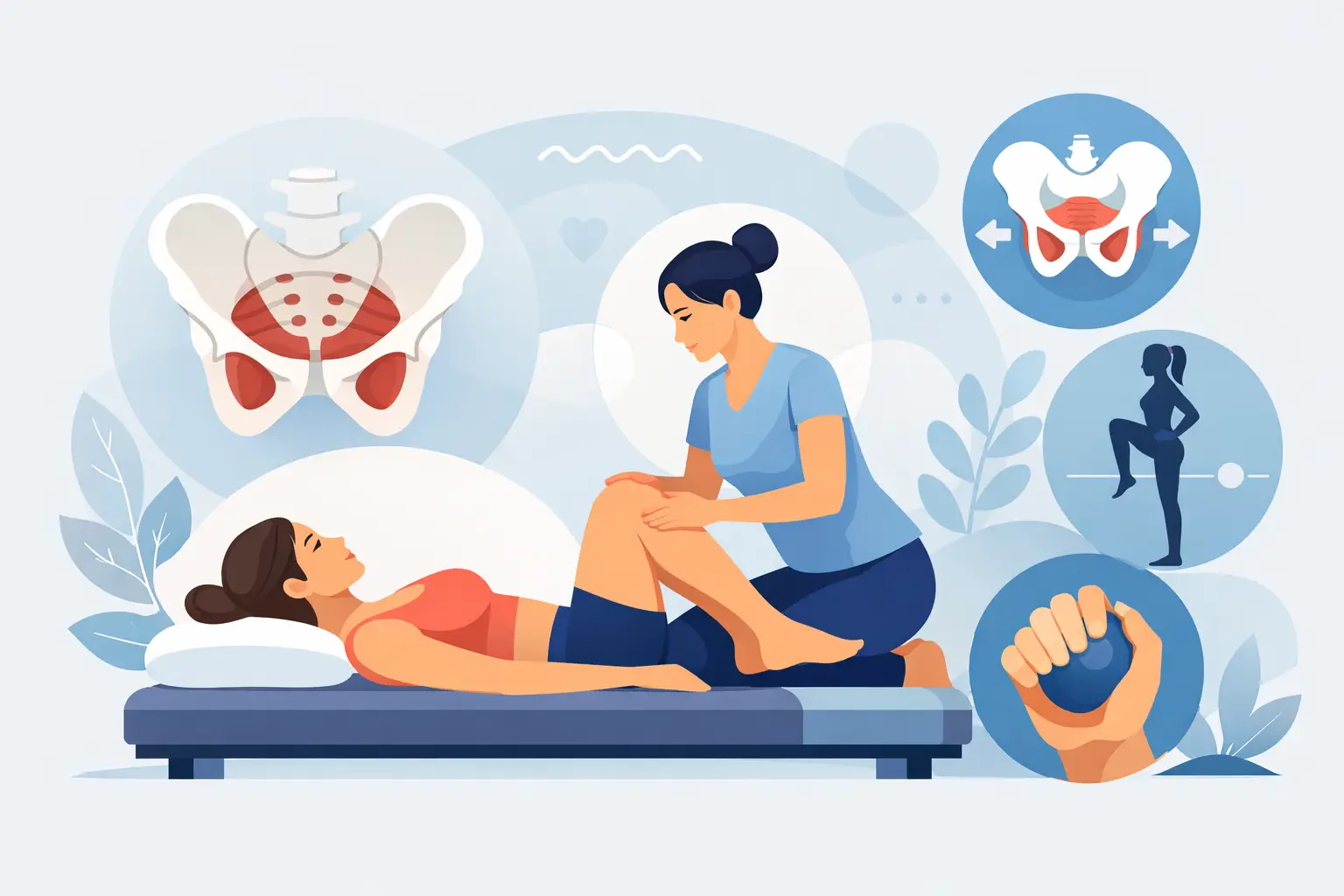
The pelvic floor is a group of muscles, connective tissues and nerves at the base of the pelvis. It helps support the bladder and bowel, contributes to sexual function, and responds to changes in breathing and abdominal pressure. It does not work in isolation.
A considered pelvic physiotherapy assessment looks beyond the idea of whether the pelvic floor is simply weak. Some people need more strength and endurance. Others have muscles that are overactive, guarded or unable to relax fully. Both patterns can contribute to symptoms such as urgency, pain, constipation, pelvic pressure or leaking during impact exercise.
Your physiotherapist may assess posture, breathing mechanics, ribcage movement, hip mobility, trunk control and the way you load during a squat, lunge, run or lift. They will also discuss your medical history, training demands, symptoms and goals. An internal examination may be clinically useful in some cases, but it is never assumed. It should be explained clearly, performed only with informed consent, and adapted to your comfort level. External assessment and movement-based testing can still provide valuable direction.
The objective is not to create a perfectly tense pelvic floor. It is to develop the right amount of support, at the right time, followed by the ability to release.
When pelvic physiotherapy can make a difference
Pelvic symptoms are common, but common does not mean inevitable. Many active people delay care because they have normalized leaking during workouts or believe discomfort after childbirth is something they should accept. Others assume pelvic physiotherapy is relevant only during pregnancy or postpartum recovery.
In reality, treatment can be appropriate for people of any sex and at many stages of life. It may help with stress urinary incontinence during running, jumping or lifting; urgency and frequent urination; pelvic pain; pain with sexual activity; constipation or difficulty emptying; pelvic organ prolapse symptoms; and recovery after pregnancy, birth, pelvic surgery or prostate procedures.
It can also be valuable when the goal is performance. An athlete returning to sprinting after childbirth may need a progressive plan that respects tissue recovery while rebuilding capacity for impact. A strength-focused client may need to refine bracing strategy so that heavy lifting does not repeatedly create symptoms. A desk-based professional who trains intensely in the evening may benefit from addressing a pelvic floor that has spent the day held in a constant state of tension.
The appropriate plan depends on the presentation. Leakage after a 10-kilometre run, pain with penetration and heaviness during a barbell squat may all involve the pelvic floor, but they do not call for the same intervention.
The performance connection: pressure, breath and load
Pelvic health is often reduced to Kegels. Targeted contractions can be useful, but they are only one tool. Repeating them without an assessment can be unhelpful for someone whose pelvic floor is already over-recruited.
A more complete approach considers pressure management. Every breath, cough, lift and landing changes the pressure within the abdomen. Ideally, the diaphragm, abdominal wall and pelvic floor respond in a coordinated way. If you hold your breath through every effort, brace with excessive force, or cannot relax between repetitions, the pelvic floor may be asked to manage more load than it can currently tolerate.
This does not mean that heavy lifting is inherently harmful or that runners should avoid impact. Progressive loading is often part of recovery. The question is whether the body has the capacity, timing and recovery to meet the demand.
At a high standard of care, rehabilitation should transfer into the activities that matter. That could mean rehearsing breathing and bracing before a deadlift, progressing return-to-run intervals, improving single-leg control for court sport, or building a postpartum return-to-training plan that feels ambitious without being reckless.
What treatment may look like
Pelvic physiotherapy is individualised, practical and progressive. Early sessions may focus on education: understanding symptoms, identifying habits that amplify them, and learning how to coordinate breathing with pelvic floor relaxation or activation. For some clients, reducing unnecessary tension is the first meaningful win.
As control improves, treatment may include manual therapy, mobility work, graded strengthening, neuromuscular retraining and task-specific loading. A program should reflect how you actually live and train. If your goal is to ski, lift, run, play tennis or feel comfortable through a demanding workday, the plan should not stop at isolated exercises on a treatment table.
Home programming is usually concise rather than excessive. The best program is one that fits your current capacity and is performed consistently enough to create change. A few precise exercises, a breathing strategy during training and a sensible progression can be more effective than a long routine that never becomes part of your week.
Progress is also not always linear. Symptoms can fluctuate with training volume, stress, sleep, hormonal changes, illness and bowel habits. This is why clinical guidance matters. The target is not perfection from one session to the next, but a more resilient system that recovers well and tolerates the demands you choose.
Pregnancy, postpartum and return to impact
Pregnancy places real and variable demands on the pelvic floor, abdominal wall and surrounding tissues. Pelvic physiotherapy can support comfort during pregnancy by addressing pain, pressure, mobility and preparation for birth, while also helping clients remain active within appropriate limits.
Postpartum care should be more than a clearance date or a generic six-week timeline. Healing, delivery experience, sleep disruption, feeding demands and previous fitness level all shape the return-to-exercise picture. Some people are ready to begin gentle movement earlier; others need more time before impact, heavy loading or sport-specific training feels right.
A quality return-to-performance plan considers symptoms, breathing, core and pelvic floor coordination, strength, impact tolerance and the confidence to move without fear. The aim is not to rush the process. It is to make the process deliberate enough that you can return with a stronger foundation.
Choosing the right time to seek care
You do not need to wait until symptoms become disruptive. If you change your route to avoid a run because of leakage, stop lifting because of pressure, or feel anxious about pain, an assessment can provide clarity. Early support can often prevent compensations from becoming entrenched.
There are also situations where medical assessment is essential. Seek prompt medical care for sudden severe pelvic or abdominal pain, unexplained bleeding, fever, inability to urinate, new numbness in the saddle area, or new loss of bladder or bowel control. Pelvic physiotherapy works best as part of the right clinical pathway, not as a substitute for urgent medical evaluation.
At Orchard, pelvic care can be approached with the same precision as any other performance goal: assess the system, understand the demands, and build capacity with intent. Your body should not require you to choose between feeling well and doing the activities that make you feel most like yourself.