
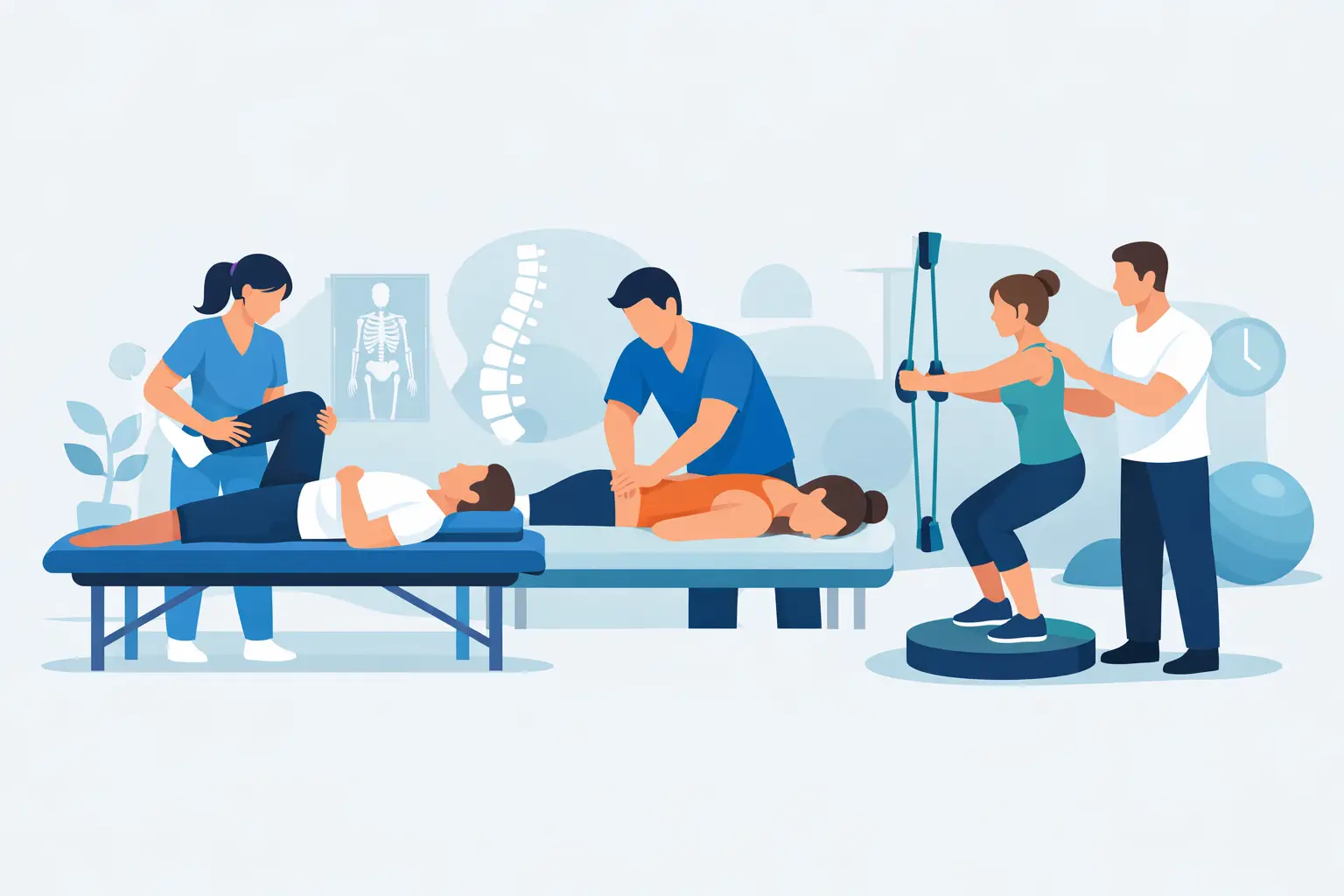
A sore shoulder that lingers through training, a back that tightens after long workdays, a knee that never quite feels trustworthy again - this is where physiotherapy treatment techniques matter most. Not as a generic checklist, but as a calibrated system for restoring movement quality, reducing pain, and building a body that performs with more confidence under load.
The best treatment is rarely a single method. High-level physiotherapy works by matching the right technique to the right tissue, the right stage of recovery, and the right performance goal. That means a runner with Achilles pain, a golfer with low back stiffness, and a strength athlete returning from surgery may all receive very different care, even if their symptoms seem similar on the surface.
What physiotherapy treatment techniques are actually designed to do
At a premium level, physiotherapy is not simply about settling pain. It is about changing how the body tolerates force, controls motion, and recovers from demand. Good treatment should improve symptoms, but it should also create measurable gains in movement efficiency, resilience, and output.
That is why experienced clinicians do not rely on one style of care. Hands-on treatment can reduce sensitivity and improve short-term mobility. Exercise therapy can rebuild strength and coordination. Load management can prevent a flare-up from becoming a cycle. Education can change the way a client trains, works, and recovers between sessions. Each piece has value, but only when it fits the full picture.
The main physiotherapy treatment techniques used in modern care
Manual therapy
Manual therapy includes joint mobilization, soft tissue work, assisted stretching, and other hands-on approaches designed to improve mobility and reduce pain. In the right case, it can create immediate change. A stiff thoracic spine may move better. A guarded neck may relax. An irritated ankle may tolerate loading more comfortably after treatment.
But manual therapy has limits. It is often most effective as a short-term accelerator, not a stand-alone solution. If a client feels better on the table but loses the result as soon as they return to training, the missing ingredient is usually not more hands-on care. It is better progression.
Exercise therapy
Exercise is one of the most effective tools in physiotherapy because it does more than ease symptoms. It rebuilds capacity. That may mean improving glute strength to reduce knee stress, retraining calf loading after an Achilles issue, or restoring rotational control in an athlete whose shoulder keeps becoming irritated.
This is where treatment becomes more performance-oriented. The goal is not simply to hand out generic stretches. It is to prescribe movement with precision - dosage, tempo, range, load, and progression all matter. The right exercise at the wrong stage can aggravate symptoms. The right exercise at the right stage can change the entire recovery curve.
Dry needling and acupuncture-style techniques
Dry needling is often used to reduce muscle tension, modulate pain, and improve tolerance to movement. Some clients respond very well, especially when muscular overactivity is contributing to restriction or discomfort. It can be particularly useful when pain is creating a protective pattern that blocks more active rehab.
Still, it is not magic, and it is not for everyone. Some clients dislike needles. Others get only temporary benefit. In most cases, it works best as an adjunct to movement-based treatment rather than the centre of the plan.
Taping and external support
Taping, bracing, and temporary external support can be useful in the right context. They may reduce irritation, improve joint awareness, or provide confidence during a return-to-sport phase. For an athlete in season, that can be a meaningful advantage.
The trade-off is dependency. If support becomes a substitute for restoring strength, control, and load tolerance, progress stalls. The best use of taping is strategic and temporary.
Electrotherapy and other modalities
Modalities such as TENS, ultrasound, or other machine-based treatments still appear in many clinics. In certain cases, they may help with short-term pain relief. But for most active adults, they should not be the foundation of care.
If a treatment plan leans heavily on passive modalities while neglecting progressive movement, it often falls short of what performance-driven clients actually need. Relief has value. Results matter more.
Why exercise usually sits at the centre
Among all physiotherapy treatment techniques, exercise remains the most transferable to real life. It prepares the body for the exact things clients want to return to - lifting, running, sitting through demanding workdays, playing sport, travelling well, and training without second-guessing every sensation.
It also allows treatment to evolve. Early-stage rehab may focus on pain-free range, gentle activation, and isometric loading. Mid-stage rehab may build strength through fuller range and greater complexity. Late-stage rehab should look more like performance training, with faster force production, deceleration, agility, or sport-specific demand.
This progression is what separates basic rehab from high-end recovery. A shoulder that can move is not the same as a shoulder that can absorb contact, handle volume, and stay stable under fatigue. A back that feels better walking is not necessarily ready for deadlifts, long drives, or tournament play.
Choosing the right technique depends on the stage of injury
Timing changes everything. In an acute phase, the priority may be calming symptoms, protecting irritated tissue, and maintaining as much movement as possible without provoking a setback. Here, manual therapy, gentle mobility work, and careful education can be highly effective.
In a subacute phase, the focus often shifts toward rebuilding capacity. This is where structured loading becomes more important. The tissue needs enough challenge to adapt, but not so much that symptoms escalate and confidence drops.
In later-stage rehab, treatment should become more demanding and more specific. If the goal is return to sport or high-level training, physio should eventually resemble the real-world demands of that activity. That is where many standard rehab plans stop too early. Pain decreases, but performance has not actually been restored.
The role of assessment in better treatment
A refined plan starts with a refined assessment. Symptoms tell part of the story. Movement quality, training history, tissue irritability, strength deficits, recovery capacity, and lifestyle stress tell the rest.
Two clients can present with the same diagnosis and require very different treatment. One person with patellar tendon pain may need more load and less rest. Another may need a temporary reduction in jumping volume, improved hip control, and a more disciplined return-to-run strategy. The label is useful. The strategy is what creates results.
This is why premium physiotherapy feels different from generic care. It is less about protocol and more about precision. At Orchard, that performance-lens approach is what allows rehab to serve not just recovery, but the bigger objective of moving and performing at a higher level.
What clients should expect from effective physiotherapy treatment techniques
Good treatment should feel purposeful. Not every session needs a dramatic breakthrough, but each one should fit a clear direction. You should understand why a technique is being used, what outcome it is meant to create, and what comes next if it works.
You should also expect adaptation. If a technique is not producing meaningful change, the plan should evolve. Some clients respond quickly to hands-on care and need less of it over time. Others need a stronger emphasis on strength, mechanics, or recovery habits. There is no premium quality in repeating the same session on autopilot.
The strongest physio plans also account for life outside the clinic. Sleep, training volume, work posture, stress, and schedule all influence recovery. The most elegant treatment technique will underperform if the broader system is ignored.
A better standard for recovery and performance
The most effective physiotherapy treatment techniques are not the trendiest ones. They are the ones selected with accuracy, timed well, and integrated into a plan that respects both biology and ambition. For active adults, that usually means less reliance on passive care alone and more focus on building a body that can handle real demand.
If treatment is done well, the goal is not just getting out of pain. It is returning with better mechanics, stronger output, and more trust in your body than you had before the setback. That is a different standard of care - and for people who expect more from recovery, it is the standard worth choosing.