
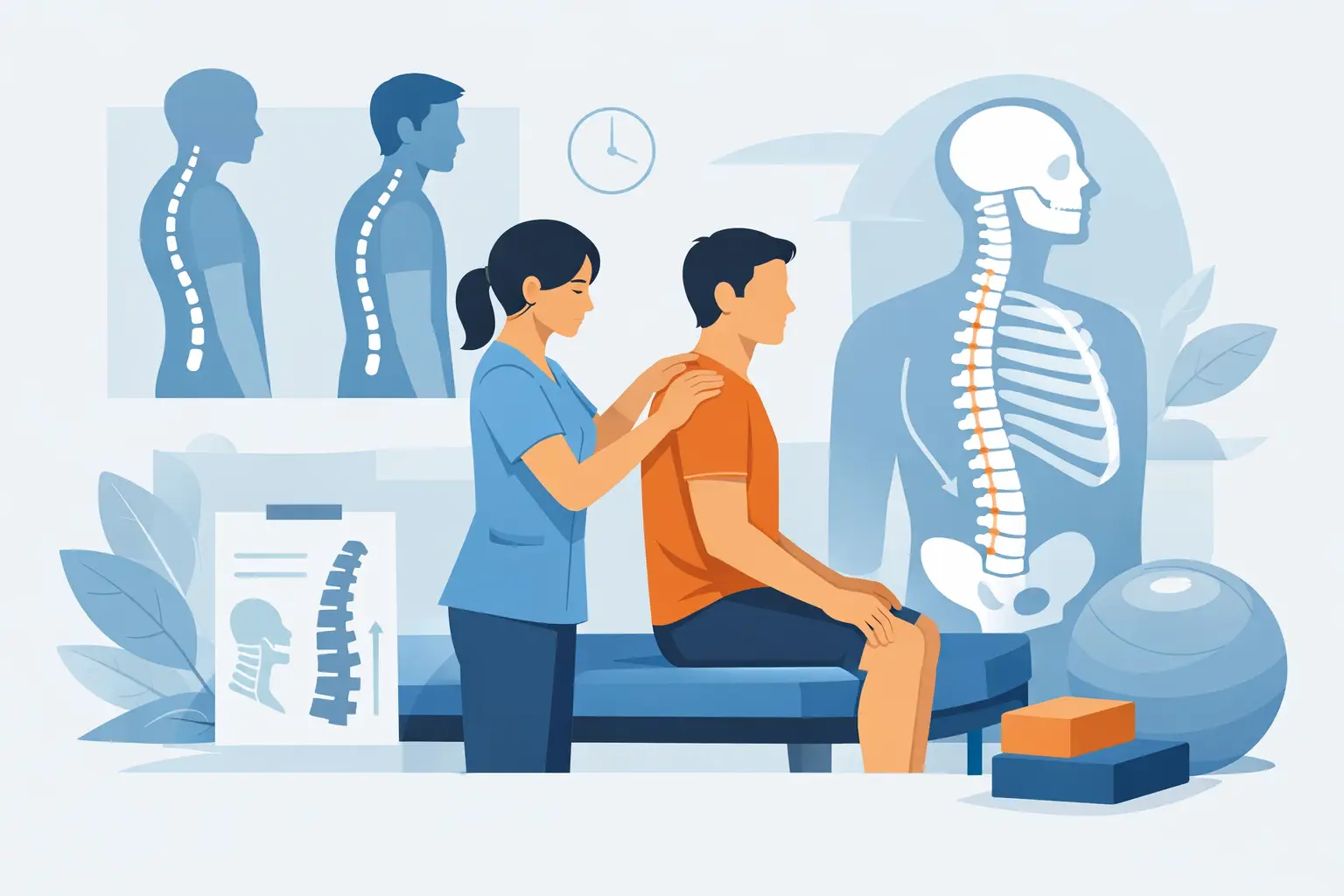
You can train hard, lift well, and still move through the day in a way that quietly works against you. The issue is rarely just “bad posture.” More often, it is a mix of stiffness, weakness, compensation, and fatigue that changes how your body loads over time. That is where posture correction physiotherapy becomes useful - not as a cosmetic fix, but as a clinical strategy to restore efficient movement.
For active adults and performance-minded clients, posture is less about standing perfectly straight and more about how well the body adapts to demand. A rounded upper back after long hours at a desk, a forward head position during training, or a pelvis that tilts excessively under load can all shift stress into the wrong places. The result may show up as neck tension, shoulder irritation, low back pain, shallow breathing, reduced output in the gym, or simply the sense that your body is working harder than it should.
What posture really means in a clinical setting
Posture is your body’s default organisation against gravity. It reflects how your joints stack, how your muscles support you, and how your nervous system manages balance and load. In physiotherapy, the goal is not to force every client into one ideal shape. The goal is to understand whether your current posture is helping or limiting the way you move.
This distinction matters. Two people can look similar at rest and have very different movement quality. One may have enough mobility and strength to tolerate that position without issue. The other may be compensating through the neck, low back, or hips every time they walk, sit, press, or run. Good assessment looks beyond appearance and asks a more useful question: where is the stress going, and is your body equipped to manage it?
That is why posture correction physiotherapy should never be reduced to cues like “shoulders back” or “sit up straight.” Those instructions can create more tension if they are not matched with the right physical capacity. Real correction comes from changing the underlying system.
Why posture changes in the first place
Poor posture is rarely a sign of laziness or lack of discipline. More often, it is an adaptation. Your body responds to what you ask of it most often, and it becomes efficient at those patterns whether they serve you well or not.
Extended desk work can reduce thoracic mobility and leave the deep neck flexors underused. Heavy training without enough movement variability can create stiffness around the hips or rib cage. Old injuries can push you into protective strategies that persist long after tissue healing is complete. Even stress plays a role. When breathing becomes shallow and upper-chest dominant, tension builds through the neck and shoulders, and posture often follows.
There is also a performance trade-off to consider. Some postures are useful in specific contexts. Cyclists, lifters, and office professionals all spend time in repeated positions that make sense for their environment. The problem starts when the body loses options. If you can only move from one default pattern, strain accumulates.
What posture correction physiotherapy involves
A high-quality physiotherapy plan starts with assessment, not assumptions. That means looking at how you stand, but also how you squat, hinge, rotate, reach, breathe, and transfer load. Your therapist will usually examine joint mobility, muscle capacity, movement control, and symptom behaviour together.
In practice, treatment often includes a blend of manual therapy, mobility work, strength progression, and motor control retraining. If your upper back is stiff, your rib cage may need mobility before your shoulder mechanics improve. If your pelvis is unstable under load, core and hip control may matter more than stretching. If your neck feels constantly tight, the answer may involve breathing mechanics and mid-back positioning, not just soft tissue release.
The premium standard in care is precision. Generic posture plans tend to fail because they chase the visible problem rather than the driver behind it. A tailored approach looks at your training history, work demands, recovery habits, and performance goals. That is what makes change durable.
Assessment shapes the plan
A desk-based professional with recurring tension headaches will not need the same intervention as a runner with hip drop or a strength athlete struggling to maintain overhead position. Their posture may reflect very different restrictions and very different demands.
This is where physiotherapy offers value beyond online advice. Rather than treating posture like a fixed flaw, it frames it as a modifiable pattern. That shift allows for a more intelligent treatment plan - one that respects your sport, your schedule, and the level of output you expect from your body.
Treatment is active, not passive
Hands-on therapy can reduce stiffness and create short-term change, but it is rarely enough on its own. To hold better position under real-life demand, your body has to earn it through strength and control.
That often means targeted exercises with clear intent. Deep neck flexor work for forward head posture. Thoracic extension and rotation drills to improve rib cage movement. Serratus and lower trap training to support shoulder position. Glute and trunk work to improve pelvic control. The exact mix depends on what your body is currently missing.
Common signs your posture may need attention
Not every postural variation is a problem. But some patterns deserve a closer look, especially when they come with recurring symptoms or reduced performance. Neck and shoulder tightness that returns daily, low back discomfort during sitting or lifting, reduced overhead range, frequent headaches, jaw tension, hip discomfort during running, and an inability to maintain efficient form under fatigue can all point to a postural issue worth assessing.
Sometimes the sign is subtler. You might feel asymmetrical in the gym. One side stabilizes poorly. One shoulder always seems to sit differently. You fatigue faster in positions that should feel strong. These are not always injury problems yet, but they can become one if ignored.
How long does posture change take?
This depends on what is driving the pattern and how consistently you work on it. If the issue is mostly stiffness and awareness, change can happen relatively quickly. If the pattern has been reinforced for years by work setup, sport demands, previous injury, and low movement variability, it takes longer.
Most clients notice early wins in symptom reduction before they see a major visual change. They breathe more easily, move with less tension, and tolerate work or training better. Structural and behavioural changes usually follow with repetition.
This is also where expectations need to stay realistic. The goal is not permanent perfect posture. No one holds an ideal position all day, nor should they. The real target is better options, better endurance, and less strain when you move through your daily and athletic demands.
The performance advantage of better posture
Posture affects more than appearance. It influences force transfer, breathing efficiency, joint mechanics, and recovery. If the rib cage is restricted, your breathing may stay shallow and inefficient. If the shoulder blade cannot move well, pressing and pulling mechanics may suffer. If the pelvis lacks control, the low back often absorbs more stress than it should.
For performance-driven clients, this matters. Better postural control can improve movement economy in running, cleaner mechanics in lifting, and less wasted effort during daily work. It can also sharpen body awareness, which makes technical coaching more effective. When the body is stacked well, strength has a more reliable platform.
That said, posture is not a magic answer for every ache or plateau. Sometimes pain is more about load management, recovery quality, or training error than alignment. Strong physiotherapy accounts for those variables rather than blaming everything on posture.
When to seek professional help
If you have recurring pain, persistent stiffness, or a pattern that keeps returning despite stretching and general exercise, assessment is worth it. The same applies if posture is starting to affect your training quality, work focus, or recovery. A refined clinic experience should do more than tell you to sit differently. It should identify the limiting factor and build a plan around measurable change.
At Orchard, posture work is approached through the lens of performance and human optimization. That means looking beyond static alignment and focusing on how your body moves, adapts, and performs under demand.
The most useful posture change is rarely dramatic. It feels quieter than that. Less tension through the day. Better control under load. A body that stops fighting itself and starts moving with more intent.