
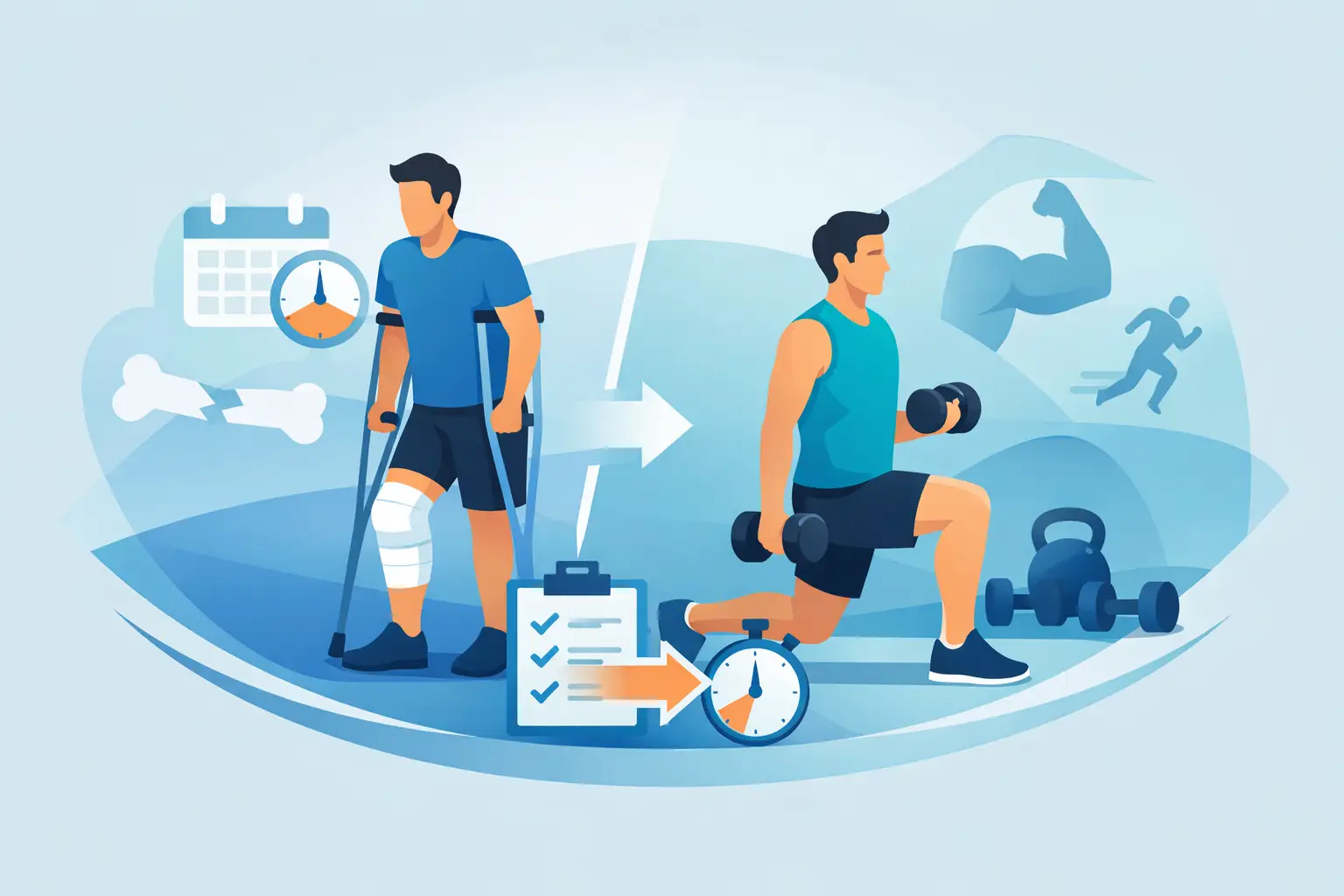
The first 72 hours after an injury can feel like a negotiation between instinct and ambition. You may want to test it, stretch it, train around it, or push through because the calendar does not pause for a sore knee, rolled ankle, or irritated shoulder. Knowing when to start rehab after injury is not about choosing between complete rest and full training. It is about introducing the right input, at the right dose, to support healing without losing unnecessary ground.
At a high standard of care, rehabilitation starts earlier than many people think. That does not always mean loading the injured area immediately. It means assessing the injury, protecting what needs protection, and beginning a purposeful plan for circulation, mobility, strength, and confidence as soon as it is appropriate.
When to Start Rehab After Injury
For many common muscle, tendon, joint, and ligament injuries, rehabilitation begins within days, sometimes even on the day of assessment. The early phase may be subtle: education, pain-guided movement, swelling management, maintaining mobility in surrounding joints, and keeping the rest of the body active. This is still rehabilitation.
The old idea of prolonged rest has limited value for most non-surgical injuries. Too much inactivity can reduce strength, stiffen joints, alter movement patterns, and make the eventual return to training feel harder than the injury itself. Conversely, doing too much too soon can aggravate symptoms or compromise tissue that needs more protection. The objective is not to rush. It is to avoid drifting into deconditioning while respecting the biology of recovery.
Timing depends on the diagnosis. A mild calf strain, a grade III ankle sprain, a fractured bone, a post-operative ACL reconstruction, and a concussion all operate on different timelines. The plan should reflect the injured tissue, the severity of the injury, your sport or training demands, and the standards required for your return.
The first phase is about control, not proving toughness
In the acute phase, pain, swelling, bruising, loss of range of motion, and instability offer useful information. A physiotherapy assessment can identify whether the issue is likely safe for progressive loading or whether it requires medical imaging, immobilization, a specialist opinion, or urgent care.
Early rehabilitation commonly focuses on restoring calm and control. That may involve comfortable range-of-motion work, isometric muscle contractions, gait retraining, strategic use of a brace or crutches, and modified cardiovascular training. If you have injured a shoulder, your lower body and trunk can often continue to train. If you have a lower-limb injury, upper-body conditioning may remain available. Performance does not need to disappear because one region is temporarily limited.
Pain is part of the conversation, but it is not the only marker. A mild and short-lived increase in discomfort during exercise can be acceptable in some injuries. Sharp pain, a feeling of giving way, increasing swelling, worsening function later that day, or symptoms that are clearly escalating are signals to adjust the plan.
The Difference Between Early Rehab and Early Return
Starting rehab is not the same as returning to sport. This distinction matters, particularly for active people accustomed to measuring progress by how quickly they can get back to running, lifting, or competing.
Early rehab creates the conditions for a higher-quality return. It restores movement options, builds capacity in the injured and uninjured areas, and exposes the body to gradually increasing demands. A return to sport is a later decision based on whether you can tolerate the specific demands of that sport.
For a runner with Achilles pain, walking comfortably is not the same as tolerating repeated plyometric force. For a hockey player after a groin strain, a good squat in clinic is not proof of readiness for hard skating, rapid direction changes, and late-game fatigue. For a lifter with low-back pain, being able to deadlift an empty bar is only one step toward handling working sets with consistent technique.
The stronger question is not, “Can I do it once?” It is, “Can I repeat it, recover from it, and perform it with enough reserve to handle the real environment?”
Signs You May Be Ready to Progress
Progression is earned through response, not just elapsed time. Your clinician will use objective testing where possible, but your day-to-day experience also matters. A move to more demanding rehab work is often appropriate when:
- Pain is stable or improving, rather than becoming sharper or more widespread.
- Swelling, stiffness, or irritability settles predictably after activity.
- You can move with good control and without compensating heavily through another area.
- Strength, balance, endurance, and confidence are improving in line with the next activity you want to resume.
These markers will look different across injuries. A recovering ankle may need to demonstrate single-leg balance, calf strength, hopping control, and change-of-direction tolerance. A shoulder may need range, rotator cuff capacity, pressing control, and tolerance to overhead loading. The point is precision: the next stage should match the next demand.
What if the injury is still painful?
Pain does not automatically mean you must stop all rehabilitation. Many tendinopathies, persistent low-back presentations, and recovering muscle injuries respond best to carefully managed loading rather than avoidance. But pain must be interpreted in context.
A program that produces mild, predictable symptoms that settle within 24 hours may be productive. A program that leaves you increasingly sore, swollen, weak, or hesitant is probably exceeding your current capacity. This is where a tailored plan outperforms generic online advice. The same exercise can be therapeutic at one dosage and unhelpful at another.
Injuries That Need Assessment Before You Train Through Them
Not every injury belongs in a self-directed return-to-exercise plan. Seek prompt medical assessment for severe pain or deformity after trauma, inability to bear weight, a joint that looks dislocated, substantial swelling, numbness or weakness, fever or unexplained redness, or symptoms that are worsening rather than settling.
Head injuries require particular caution. After a suspected concussion, do not return to contact sport, high-speed training, or other activities with risk of another head impact until you have completed an appropriate, graded return-to-activity process under qualified guidance. New or worsening headache, repeated vomiting, confusion, seizures, increasing drowsiness, or significant neurological symptoms require urgent medical attention.
Post-operative rehabilitation also needs to follow the constraints of the procedure and surgeon's protocol. Early work is often essential, but the permitted range, weight-bearing status, and loading progression are not interchangeable from one surgery to another.
Build a Return That Holds Up
The best rehabilitation is not simply an exit route from pain. It is a performance plan that addresses why the injury happened, what the injury exposed, and what your body will need next.
That may mean rebuilding single-leg strength after an ankle sprain, improving hip control after recurring knee pain, restoring thoracic mobility and shoulder capacity for overhead sport, or revisiting load management after an abrupt increase in training volume. Sleep, nutrition, work stress, travel, and recovery habits also shape tissue capacity. A high-performing body is not built only in the training session.
At Orchard, rehabilitation is approached as a return to capable, confident movement, not a checklist of passive treatments. The clinical diagnosis matters, but so does the life you are returning to: a marathon build, a ski season, a demanding gym programme, or the freedom to move through your day without second-guessing every step.
There is no prize for starting too aggressively, and little value in waiting until the body has become guarded and deconditioned. Start with an informed assessment, protect what needs protection, and make each progression specific enough to carry you back to the activities that matter.